


By Jim Newton
A year ago, vendors had set up shop across the street from MacArthur Park in Los Angeles. They were dealing drugs and stolen goods from underneath makeshift tables at their stands.
Langer’s, the neighborhood’s historic deli, was threatening to leave for good. And assaults in the area were on the rise.
Today crime is down in MacArthur Park, Langer’s is staying, and the drug vendors are gone — or at least displaced.
That’s the good news about the city’s yearlong attempt to bring safety and tranquility to MacArthur Park and its surrounding neighborhoods. There is progress.
The bad news is that the area remains blighted and filthy.
A walk through the park Monday morning found evidence of progress: most spaces were relatively clean, and a couple young boys scurried around on the playground equipment, their watchful dads nearby.
But there were also painful reminders of how far this area has to go.
Stores along Alvarado Street were open, but customers were sparse. Litter filled spaces where fences keep out street vendors. Water from recent rains congealed beneath an underpass, forming a dank, dirty pool. And young men lay glassy-eyed on benches, staring vacantly, their mouths agape.
The city’s campaign to restore MacArthur Park to some of its long-faded glory has within it some elements of the larger work Los Angeles itself faces. The park is a congregation point for unhoused men and women; it is a locus of drug sales and it sits amid one of the city’s most heavily migrant communities.
It is, in all those respects, Los Angeles in microcosm. Its struggles are those of the larger city, and of urban America itself.
Recognizing that, city leaders focused attention on MacArthur Park in 2025, pouring money and resources into the area. Council member Eunisses Hernandez, whose district includes the park, cites $27 million in city investments in what she describes as “care first” programs that address drug overdoses, housing crises and conflicts between gangs.
Those investments have resulted in quantifiable results: the removal of more than 36,000 pieces of hazardous waste, including needles and other drug paraphernalia; distribution of more than 17,000 doses of Narcan; cleaned sidewalks; painted curbs and dozens of residents housed.
In some cases, those interventions have literally saved lives. The council member’s office said 138 overdoses have been reversed by crews assigned to walk the parks and be alert for danger.
It’s thus heartening to see at least glimmers of progress.
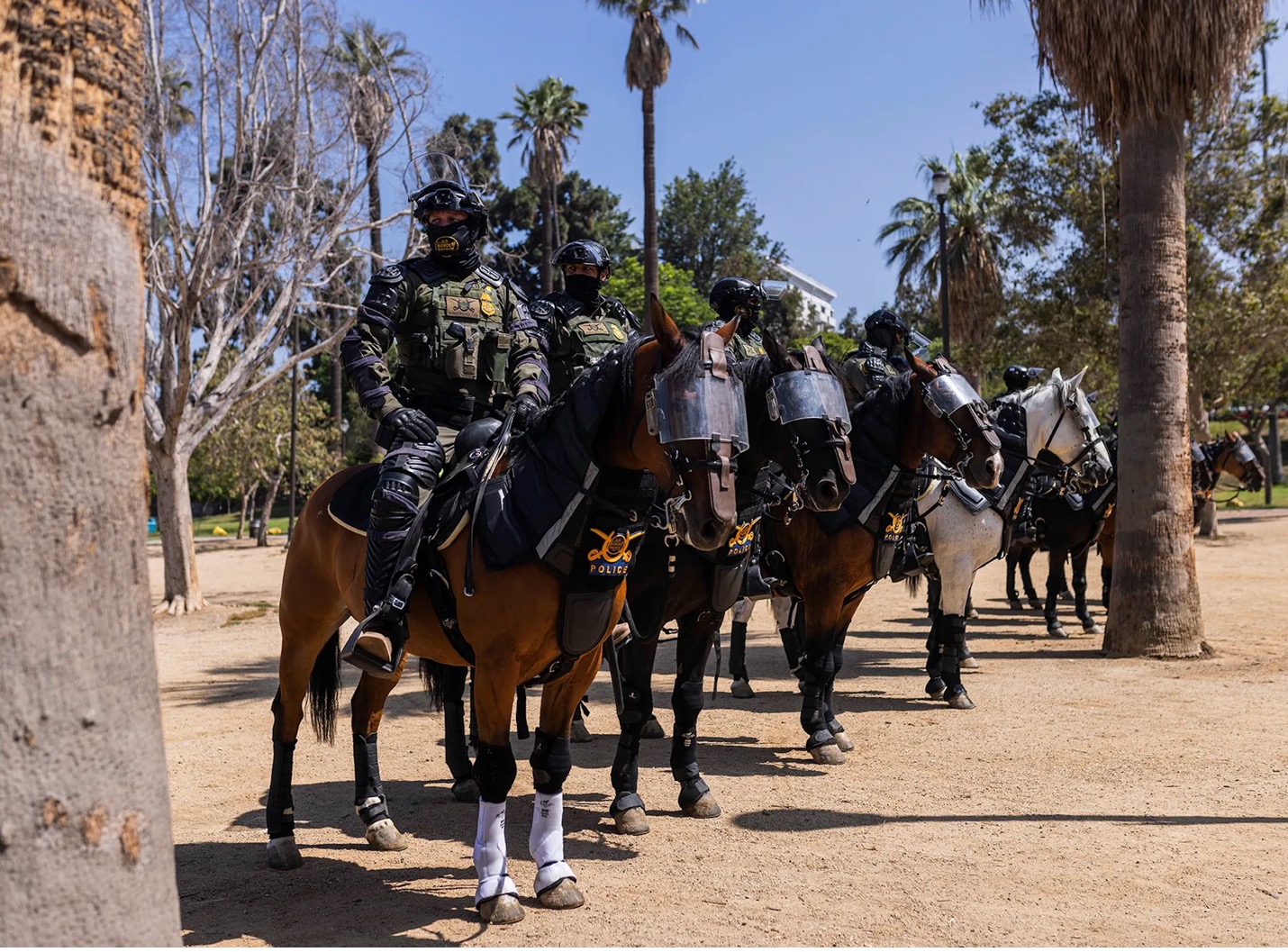
The fences installed in early 2025 succeeded in boxing out vendors who were using the neighborhood to sell drugs and stolen goods. The increased police patrols helped chase off some local dealers and pushed some of the open drug use outside the perimeters of the park.
Those successes are directly attributable to city interventions by Hernandez and others. But the larger goal remains elusive.
This is not a community at peace, nor has it turned the corner from blight into prosperity.
The streets smell of urine, and the air wafts a scent of weed and other drugs. The litter is degrading.
The overall effect is one of exhaustion. Storekeepers don’t look at drug users with compassion or a desire to help. They shoo them away from storefronts, tired of their smell and grime.
All of which serves as a reminder that this is hard work, that solutions to drugs or homelessness are not pulled from a shelf and rolled out into neighborhoods, that even $27 million of city investment does not change a community overnight.
Money and effort are essential to progress, but they do not guarantee it. Only commitment, work and time can be truly transformative.
