


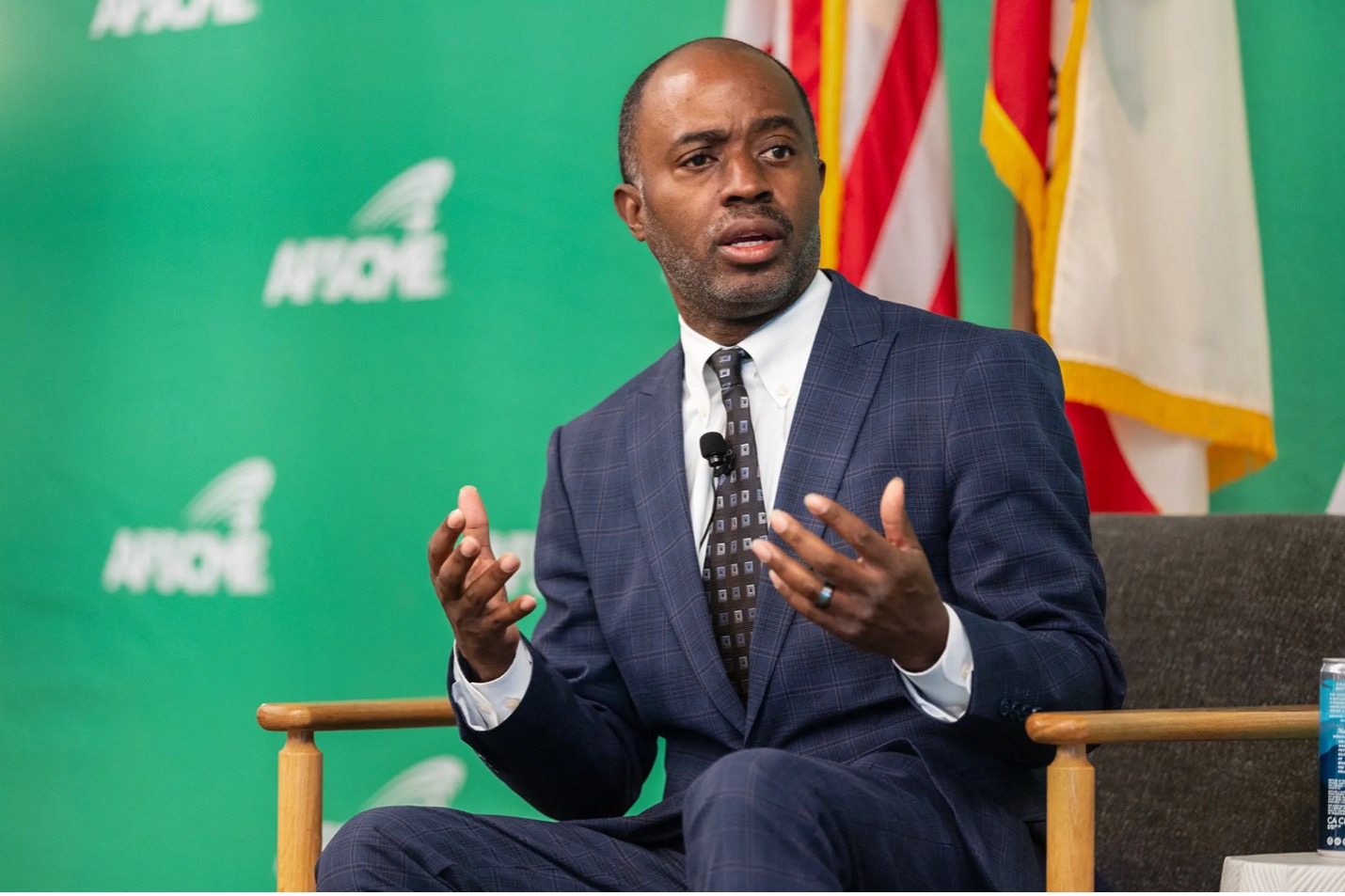
By Carolyn Jones
State Superintendent of Public Instruction Tony Thurmond said he was blindsided by Gov. Gavin Newsom’s proposal recently to curtail the superintendent’s duties, and he disagrees with it, although it’s unclear what he can do to stop it.
“Tony Thurmond is proud and grateful to work with Gov. Newsom. They’re both champions of public education,” said Elizabeth Sanders, spokeswoman for the California Department of Education, which Thurmond heads. Sanders was speaking on behalf of the superintendent.
“Unfortunately, on this particular issue they are not aligned.”
In his State of the State address on January 1, Newsom proposed shifting oversight of the Department of Education, a 2,000-employee state agency, from the superintendent to the State Board of Education. The move would concentrate more power over K-12 schools with the governor, who appoints the school board.
The superintendent would remain an elected position, but with diminished and less defined duties.
Referencing a December report from Policy Analysis for California Education, Newsom’s aim is to simplify California’s convoluted system of K-12 school governance. Currently, education leadership comes from the governor, the Legislature, the State Board of Education, the superintendent and the Department of Education — who may or may not have the same vision for how to best run schools and teach children. At the local level, school boards and county offices of education also have a good deal of power over budgets and day-to-day school operations.
The result of the many-headed leadership structure is that schools often don’t know which policies to follow, according to the PACE report. Guidelines can be contradictory, redundant or just plain incoherent, researchers found.
A slew of education advocacy groups have supported Newsom’s proposal, saying it will clarify a system that’s been confusing and inefficient for a century. California is one of only a handful of states with such an education governance model.
